Where lighting ideas turn into real lighting solutions

Sports Field and Court Lighting

LED lighting packages for tennis, pickleball, basketball, volleyball, baseball, horse arenas and putting greens, with free photometric design on request.

Home Lighting Products Athletic and Sports Field Lighting

Lighting a court or field is a different problem from lighting a parking lot. The playing surface needs even light at a specified level, the ball has to stay visible against the sky, and the light has to stay on the field rather than in a neighbor’s window. Browse the range below, or read on for help choosing.

Browse All Athletic and Sports Field Lighting

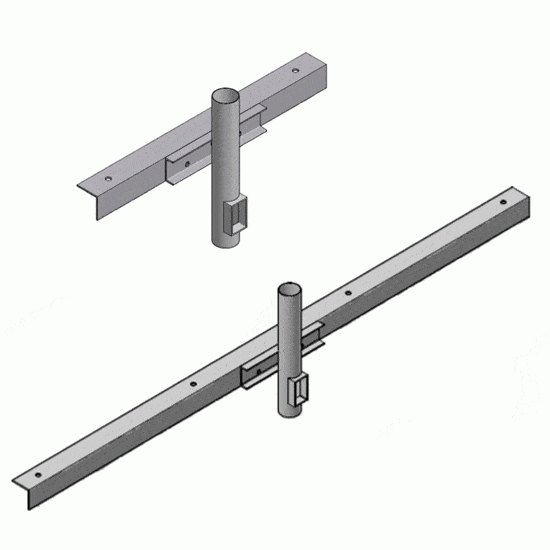
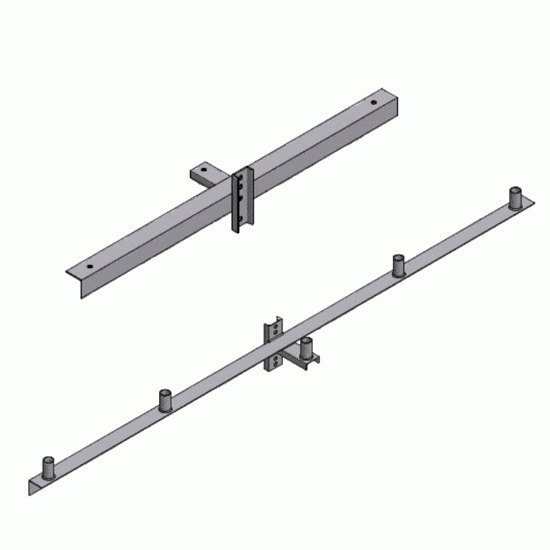
Each Angle Iron Cross Arm supports up to five sportslighters and come pre-drilled for convenience. These arms mount on round tapered metal poles to ho

Designed for wooden poles, the Angle Iron Cross Arms support sportslighters for horse arenas and other sports fields. These cross arms hold up to five

LED Spot’s pre-designed baseball and softball field lighting packages include heavy duty lighting fixtures and mounting brackets. Our lighting k

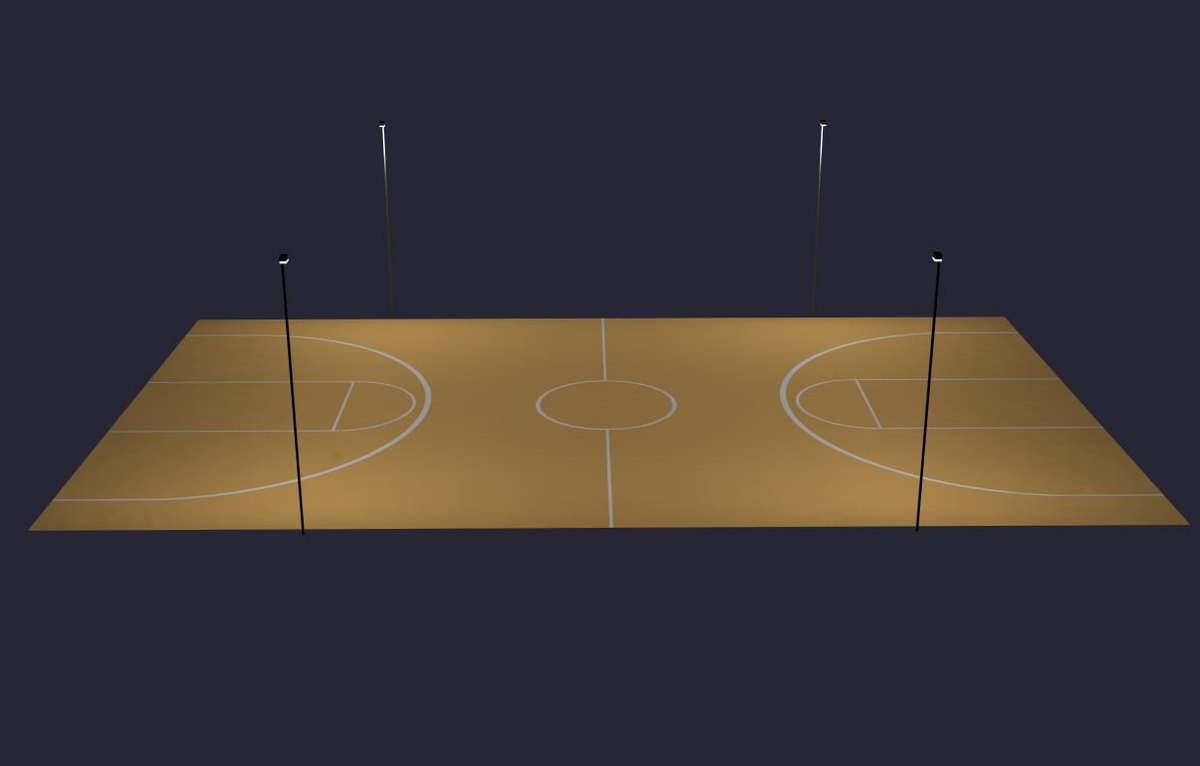
Available in half court and full court, our basketball lighting systems properly illuminate outdoor, recreational courts with a smooth light output ac

Bocce Ball a popular sport in Italy has gained favor in the United States, having many seeking out bocce ball lighting for their bocce court. A typ

LED Spot’s horse arena lighting products can accommodate arenas of any size. Whether it’s for professional or backyard use, our high inten

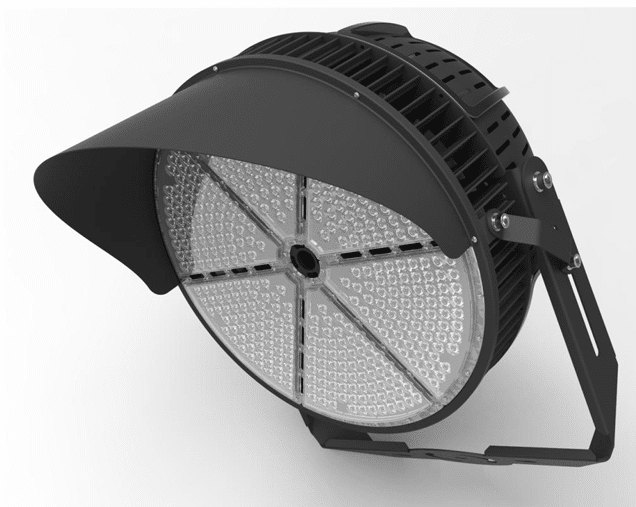
The DTH-SPRT-600W Stadium Sport Lights are the top of the line in both quality and price. With LUMILEDs LED chips and a premium driver (Sosen 100-277V

The 17.5-foot, 2-piece square steel pole is constructed with a hand hole that is located 1’ 6” above the pole base.The hinge mechanism is build with t

An LED pickleball court lighting system provides reliable, quality lighting for customers with a standard 35’ x 70’ court pad with actual standard pic

Our selection of putting green lights allow for nighttime golf practice. Whether it’s a commercial driving range or a residential putting green,

LED Spot’s all-inclusive tennis court lighting packages make simple lighting solutions for residential and commercial courts. Whether it’s

LED Spot’s pre-designed lighting systems provide maximum light efficency for outdoor volleyball courts. The professional layout of these kits of

How Much Light Does a Court or Field Need?

Sports lighting is specified in foot-candles measured on the playing surface, and the target changes with the level of play. Recreational and residential courts sit at the low end. Competitive and tournament play needs more, and broadcast more again.
Uniformity matters as much as the average level. A court lit brightly in the middle and dimly at the baselines plays worse than one lit evenly at a lower level, because players track a fast-moving ball across the whole surface and the eye cannot adapt quickly enough between zones.

What Mounting Height Should the Poles Be?

Pole height is set by the sport and the size of the playing area, not by preference. Taller poles put the source further from a player’s line of sight, which cuts direct glare, and they light a larger area per fixture so fewer poles are needed.
Height also interacts with beam type and aiming. A photometric layout resolves all three together and shows the light levels across the surface before any concrete goes in.

How Do You Keep Glare Out of Players' Eyes?

Glare control comes from three things: mounting the fixture high enough, aiming it so the brightest part of the beam lands on the surface rather than toward the players, and using shields or visors where the geometry is tight.
Full cutoff optics also keep light off neighboring property, which matters for courts in residential areas and for any facility working under a local ordinance.

What Is the Difference Between a Kit and Individual Fixtures?

A lighting kit is a matched package: fixtures, poles, crossarms and mounting hardware sized for a standard court or field dimension. Kits take the guesswork out of a common layout and arrive as one coordinated order.
Individual fixtures make sense when the space is a non-standard size, when poles already exist, or when a facility is being retrofitted in stages. If you are unsure which applies, send the dimensions and we will model it.

Can You Light an Existing Court Without New Poles?

Often yes. If the existing poles are structurally sound and correctly positioned, a retrofit swaps the fixtures and keeps the infrastructure. The pole still has to carry the new fixture’s EPA under local wind loading, so pole condition and rating get checked first.
Where the original layout was wrong, adding light to bad positions rarely fixes it. A photometric model shows quickly whether the existing pole positions can deliver the levels you need.

From Backyard Court to Stadium: Scaling the System

The same physics runs a backyard pickleball pad and a stadium field: light the playing surface evenly, keep glare out of the players’ line of sight, and keep spill off the neighbors. What changes with scale is the hardware. Small venues run compact poles with two to four fixtures. Larger fields and stadiums move to tall tapered poles carrying banks of high output sportslighters on crossarms, aimed zone by zone from a photometric model.
Spectator venues add a second audience: the stands have to read the ball as clearly as the players do, and broadcast or filming raises the bar again. If your facility hosts events, tell us how it is used and we will model light levels for the play surface and the seating together.

What About Controls and Technology?

Modern LED sports lighting is switched and managed, not just installed. Photocells handle dusk to dawn duty on security and perimeter fixtures, timers and scheduling match court hours, and instant on and off means no more waiting for HID lamps to strike before practice. Zoned switching lights one court of a multi-court facility without burning the whole site.
Controls also protect the budget: a court that lights only when reserved consumes a fraction of an always-on system. Browse compatible photocells and sensors in our lighting accessories range, or ask us to spec the control package with the fixture layout.

Frequently Asked Questions

It depends on the level of play. Recreational courts are designed to a lower maintained average than competitive or tournament courts, and uniformity across the surface matters as much as the average figure. Send your court dimensions and intended use and we will model the actual levels before you order.

LED fixtures on correctly positioned poles, aimed to put even light across the full court including the baselines and kitchen line, with glare controlled so players can track the ball overhead. Pickleball courts are small enough that fixture aiming and mounting height matter more than raw output.
It depends on whether it is a full or half court and on the mounting height available. Full court systems typically use more poles than half court systems, and taller poles reduce the count. A photometric layout gives the exact number for your dimensions.

Yes. LED fixtures work with dimming and scheduling controls, which is useful where a facility wants full levels for play and reduced levels for maintenance, warm up or security after hours.

Yes. Free photometric design is available on request. Send the court or field dimensions and we will model fixture placement and show the light levels across the playing surface.

An arena is usually enclosed or partly enclosed and the riders and horses need even light with very little glare at eye level, so fixtures are mounted and aimed differently than on an open field. Arena packages are sized by the arena footprint, for example 100 by 200 feet.

Free Photometric Design

Send us your dimensions and we will model fixture placement and light levels at no charge, before you commit.

Ready to Get Started?

Request a quote on any item, or call and talk it through with someone who specs these every day at (281) 972-5006.