Where lighting ideas turn into real lighting solutions

Horizontal Tenon Adaptors

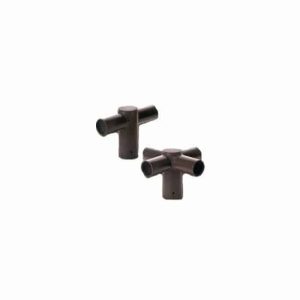
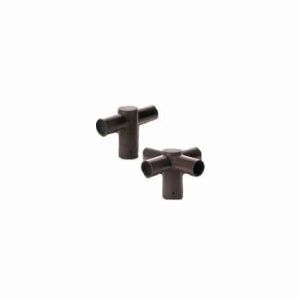
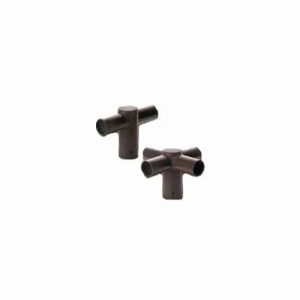
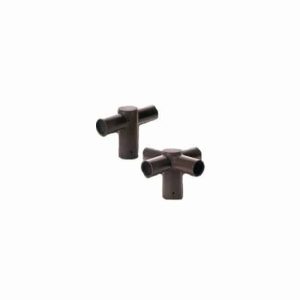
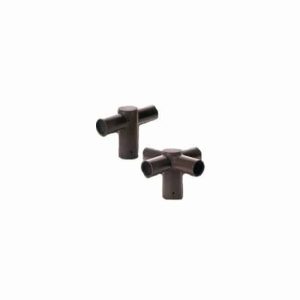
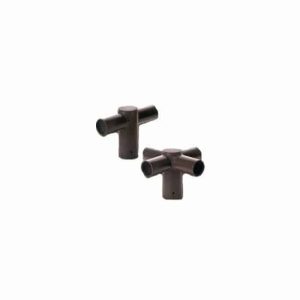
Pole top adaptors with one to four sideways tenons so side-entry slipfitter fixtures mount at fixed angles.

A horizontal tenon adaptor sits on the pole top and points its tenons out sideways instead of straight up. That suits fixtures with a side-entry slipfitter, which slide onto a horizontal tenon and hang level. LED Spot carries six configurations: 1 at 90 degrees, 2 at 90 degrees, 2 at 180 degrees, 3 at 90 degrees, 3 at 120 degrees and 4 at 90 degrees, each in black, bronze, US green or white. On the multi-tenon models, the degree figure is the spacing between tenons, so 2 at 180 sets fixtures back to back and 4 at 90 covers all four sides. Before ordering, confirm your LED area lights use a horizontal slipfitter.

Shop Horizontal Tenon Adaptors

How Many Tenons Should Your Horizontal Tenon Adaptor Have?

Map where light needs to go from each pole, then match the tenon count and angle.

  • One side only. The 1 at 90 model suits perimeter poles that light inward from a property line.
  • Two fixtures. Use 2 at 180 for a pole between two rows, or 2 at 90 for a corner pole lighting two sides.
  • Three or four fixtures. Choose 3 at 90 for a pole on the edge of an aisle crossing, 3 at 120 for an open pad, and 4 at 90 for a pole in the middle of four bays.
  • Read the EPA for your layout. LED Spot’s fixture EPA chart lines up with these six configurations. With Lifestyle Small fixtures it reads 1.6 for a single arm, 2.3 for double 90, 2.7 for double 180, 3.3 for triple 90, 3.4 for triple 120 and 4.1 for quad 90. Lifestyle Medium fixtures read 1.8, 2.7, 3.1, 4.0, 4.0 and 4.9. Our pole selection guide shows how to match that number to a pole.
  • Confirm slipfitter direction. Fixtures with an upright slipfitter need a vertical tenon, so they belong on bull horns instead.

For upright-slipfitter fixtures, see our round straight bull horns for the same two to four head layouts.

Horizontal Tenon Adaptors Questions

It lets you mount one to four fixtures with side-entry slipfitters on a single pole. The tenons stick out horizontally, so the fixtures hang level at the pole top instead of sitting on raised arms.

It means two tenons spaced 90 degrees apart, so the fixtures face two adjacent sides, like the inside corner of a lot. A 2 at 180 model sets them on opposite sides of the pole.

Bull horns carry vertical tenons on arms that reach away from the pole, for fixtures with upright slipfitters. A horizontal tenon adaptor keeps the tenons tight to the pole top and points them sideways, for side-entry slipfitters.

Each of the six configurations comes in black, bronze, US green or white. Match the pole and fixture housing so the assembly reads as one piece.

On LED Spot’s fixture EPA chart, yes. Two Lifestyle Small heads read 2.7 at 180 degrees and 2.3 at 90 degrees, and Lifestyle Medium heads read 3.1 and 2.7. That is why the chart value for the exact layout is a better guide than multiplying one fixture by the head count.

Work through it in order: choose the fixture, choose the adaptor layout, read the fixture EPA for that layout, pick the pole height, then confirm the pole’s EPA at your site wind speed is equal to or more than the fixture EPA. If the pole falls short, drop a head or step up the pole. The importance of EPA wind ratings explains what those numbers represent.

Pole Mounting Guides and Resources

How to choose a pole: pick the fixture and bracket, look up the fixture EPA, then match pole height to the wind load at your site.

What a fixture EPA wind rating means and when it decides which pole, arm and fixture combination will work.

Why lighter, flatter LED fixtures changed the wind load that poles and arms have to carry.

A step-by-step checklist for a complete light pole order, from pole type and height to shaft size and wall gauge.

Ready to Get Started?

Request a quote on any item, or call and talk it through with someone who specs these every day at (281) 972-5006.